Pyrrhopappus pauciflorus
Family: Asteraceae
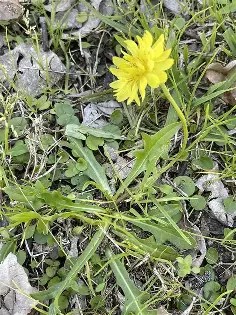
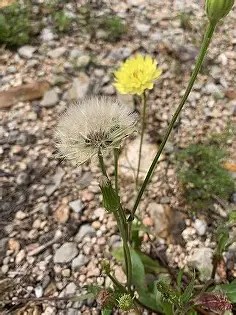
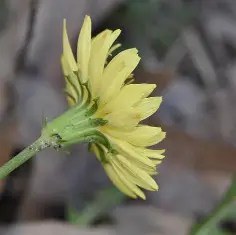
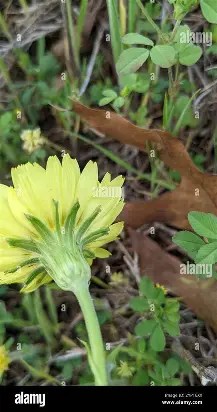
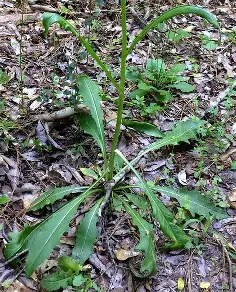
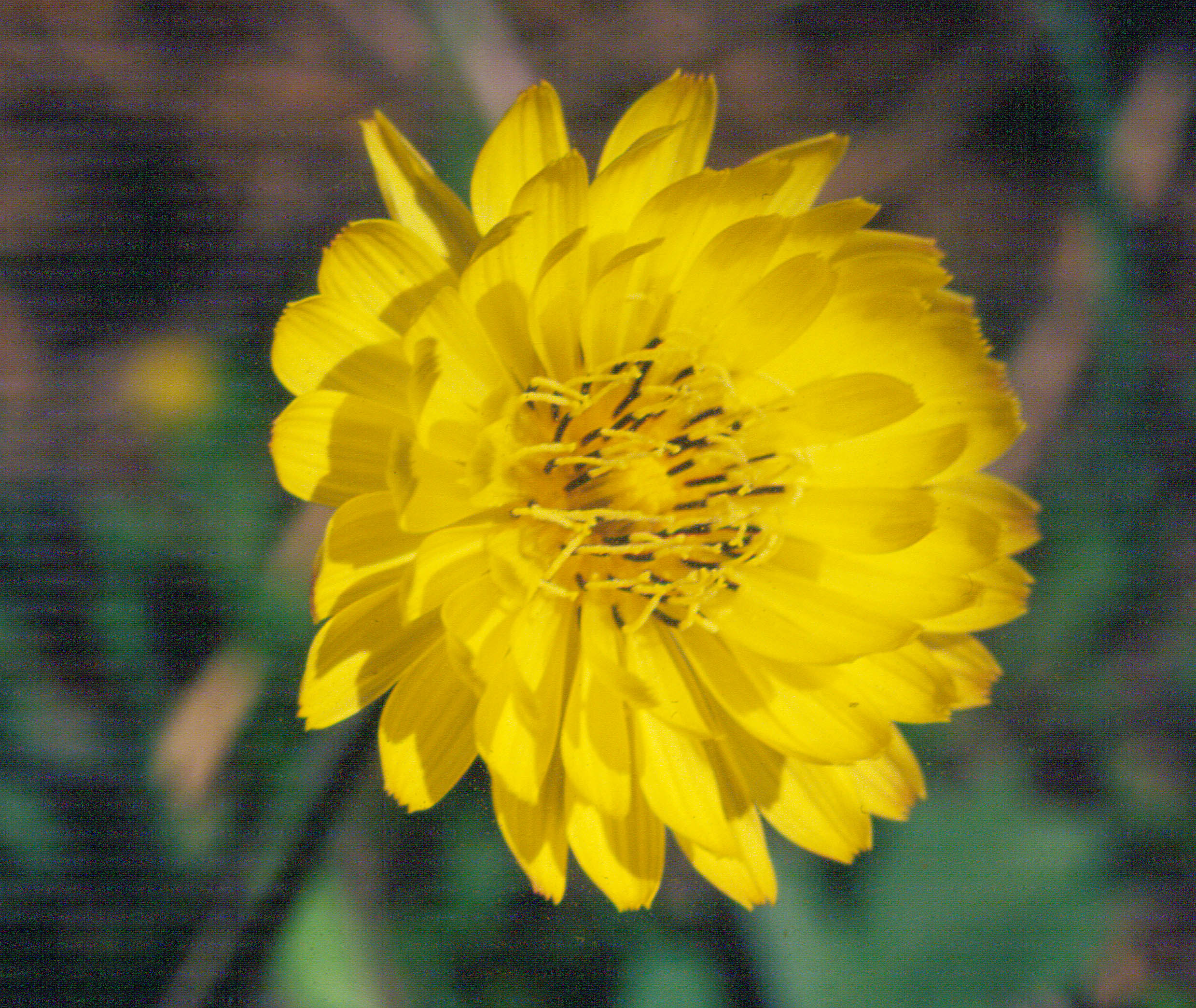
Plant Description: Annual, 15-65 cm high, much resembling P. grandiflorus but more variable. Sap milky. Leaves mostly crowded at the base; blades usually lobed up to 6 inches long. Basal leaves are deeply lobed or toothed, 5 1 cm (3–8 inches) long, while upper stem leaves are smaller, pinnatifid, and sometimes toothed, with 2–5 lobes. Leaves are hairless or have fine hairs along edges and undersides Flowers heads up to 3.2 cm (1 3/8 inches) broad; ray flowers yellow, 5-lobed; disk flowers absent. Achenes about 0.5 cm (3/16 inch) tall, with a small beak at the top; pappus bristles up to 1/4 inches long.
Plant Trivia: Was first described by Scottish botanist David Don in 1830 as Chondrilla pauciflora before being reclassified under the genus Pyrrhopappus.
Field Identification: Bright yellow, dandelion-like flower heads with numerous ray florets and dark anthers in the center. Flowers open in the morning and close by midday. Dark anther tubes in the flower center distinguish it from other dandelion namesakes.
Occurrence: Common on various soils in prairies, openings, disturbed areas and along roadsides. Is native to Texas, Oklahoma, Arkansas, New Mexico, Arizona, Louisiana, and northern Mexico.
Bloom Period: February – June
Plant Use: This is an early spring nectar for pollinators. Its seeds are adapted for wind dispersal, allowing it to colonize disturbed habitats efficiently.
Key to the species of Pyrrhopappus:
- Plant with tuber at base of a vertical rhizome 2-9 cm long…………………………………………………………………………………….P. grandiflorus
Plant without tuber or rhizome……………………………………………………………2
2. Fruiting involucre usually 20-25 mm long………………..P. carolinianus
Fruiting involucre usually shorter…………………………………P. pauciflorus
 stxflora