Populus deltoides
Family: Salicaceae
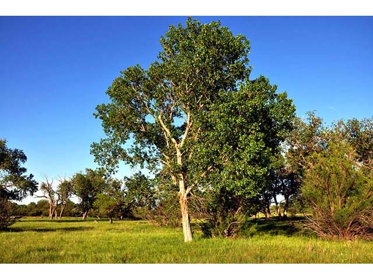
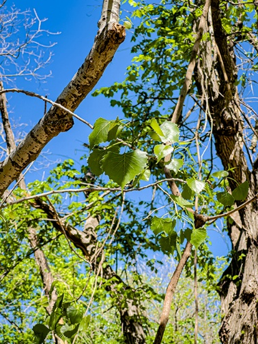
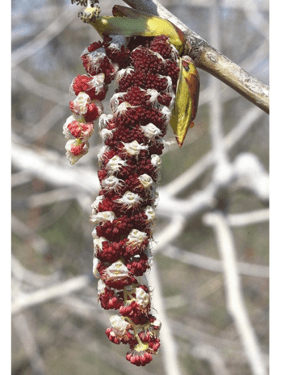
Description: Deciduous tree to 16 m or higher with triangular or broadly ovate leaves 7-11 cm long. Leaves large, simple, alternate, deciduous, deltoid to deltoid-ovate or suborbicular-ovate with toothed margins. Flowers in catkins appearing before the leaves, unisexual with the male and female on separate trees. Has a rather short, thick trunk; heavy branches, and wide, open crown.
Field Identification: A large, fast growing North American hardwood tree known for its triangular leaves and cotton-like seed dispersal. Eastern cottonwood is a large-canopied tree with upright limbs becoming arching at the tips creating a vase-shape outline. The deciduous tree grows to 31 m or more with stout branches. Catkins appear before leaf emergence. Large, papery, toothed, triangular, medium-green leaves turn yellow in fall. Leaves simple, alternate and papery. Large tree with a massive trunk often forked into stout branches, and broad, open crown of spreading and slightly drooping branches. Pendulous clusters of flowers without petals. Seeds wind-borne on a tuft of cottony hairs.
Plant Trivia: The common name refers to the abundant cottony seeds; another name, “Necklace Poplar,” alludes to the resemblance of the long, narrow line of seed capsules to a string of beads. Plant is known for cottony seeds which is shed when fruit is ripe. Catkins produce an abundance of (airborne) cotton in spring. Weak wood and brittle limbs create wind and ice problems for this fast grower. Susceptible to a number of cankers and borers. Female trees produce clouds of cottony seeds each spring that can be a temporary nuisance. Roots can be invasive. Adapts to a variety of soils. Tolerates saline, pollutants and a wide pH range.
Occurrence: Scattered along streams and occasional in ditches and residential locations
Bloom Period: March-July
Propagation: Seeds or hardwood cuttings
Plant Use: Planted for shade and as ornamental. Seeds are eaten by birds and foliage is browsed by cattle. Important for environmental restoration and wildlife habitat.
 stxflora