Cuscuta exaltata
Family: Convolvulaceae
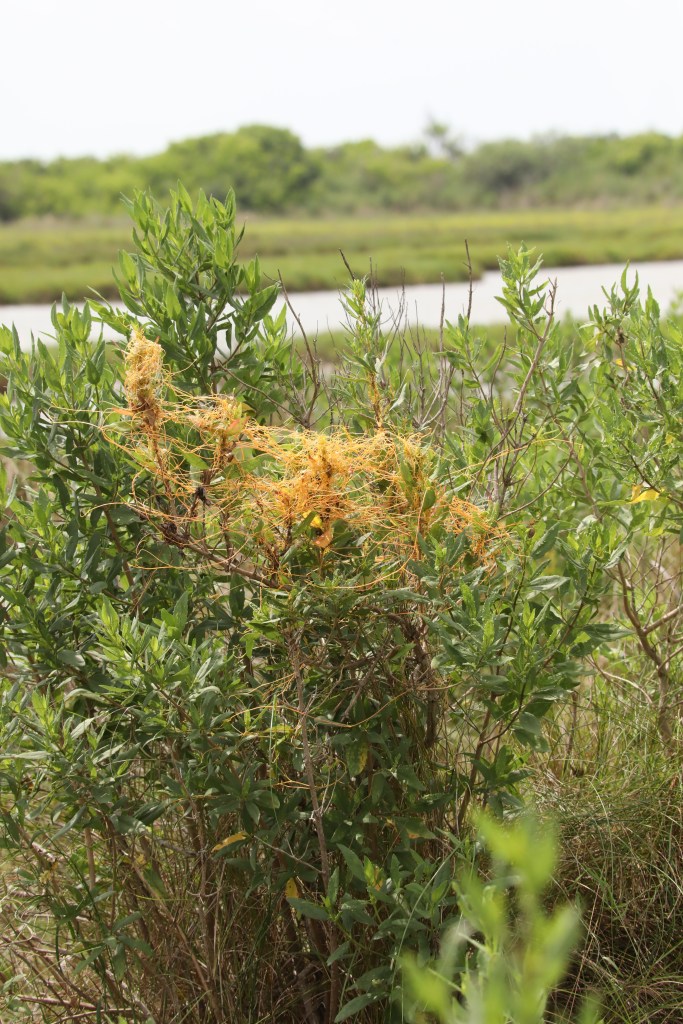
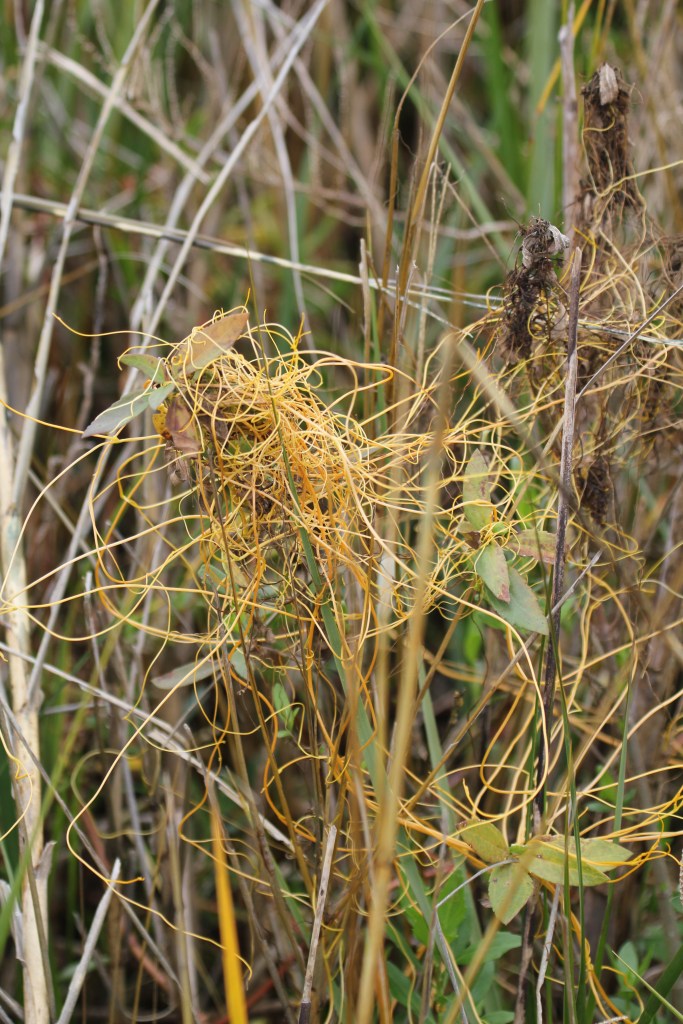
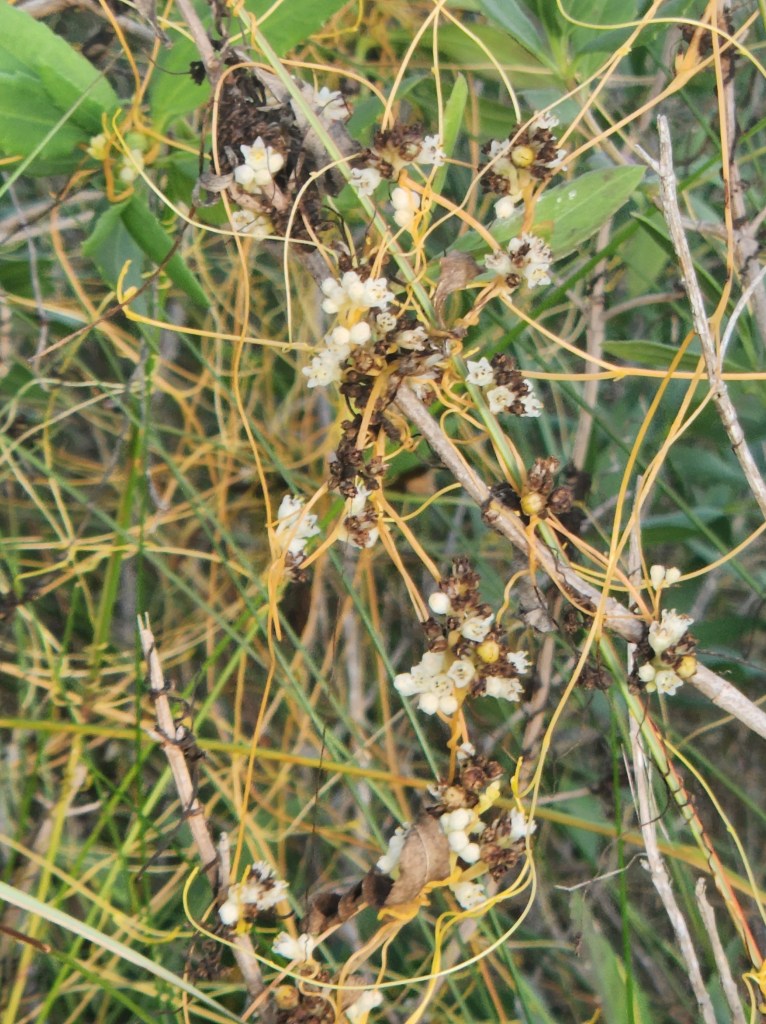
Plant Description: Large thick-stemmed vine parasitizing mainly Persea (Redbay Trees) and Quercus (Oak trees). Orange to yellow, stringy. Flowers white, Styles united
Field Identification: Looks like mass of string or pieces of plastic piled on top of plants.
Plant Trivia: Six species of Cuscuta in our area. of plants. This is a parasitic plant. All its nutrition is derived from its host.
Occurrence: Rather frequent in coastal woods from Aransas Refuge to Flour Bluff.
Bloom Period: July – October
Plant Use:
Key to the Genus Cuscuta:
-
Styles united…………………………………………………………………………………..C. exaltata
Styles separate……………………………………………………………………………………………….2
2. Calyx of separate sepals……………………………………………………………C. cuspidata
Calyx tubular below………………………………………………………………………………………3
3. Fruits globose, not thickened at base of styles………………………………………..4
Fruits globose-ovoid, thickened at base of styles…………………C. indecora
4. Calyx with spurlike projections at base……………………………………C. runyonii
Calyx not spurred…………………………………………………………………………………………5
5. Corolla lobes shorter than tube, ovate………………………………C. obtusiflora
Corolla lobes as long as tube, triangular……………………………C. pentagona
- Styles united…………………………………………………………………………………..C. exaltata
Styles separate……………………………………………………………………………………………….2
2. Calyx of separate sepals……………………………………………………………C. cuspidata
Calyx tubular below………………………………………………………………………………………3
3. Fruits globose, not thickened at base of styles………………………………………..4
Fruits globose-ovoid, thickened at base of styles…………………C. indecora
4. Calyx with spurlike projections at base……………………………………C. runyonii
Calyx not spurred…………………………………………………………………………………………5
5. Corolla lobes shorter than tube, ovate………………………………C. obtusiflora
Corolla lobes as long as tube, triangular……………………………C. pentagona

