Tagetes lemmonii
Family: Asteraceae
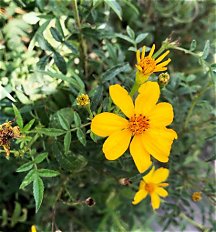
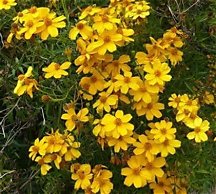
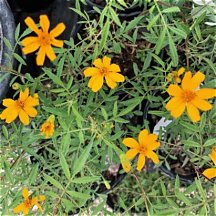
Description: Perennial. Leaves green; up to four inches (10 cm) long; leaves pinnately lobed, linear to lanceolate; edges (margins) dentate with fine hair-like spines on each tooth; arranged opposite along stems. Tall, multibranched shrub. Bright yellow flower heads in flat-topped array with both ray .
Field Identification: This is a shrub sometimes reaching as much as 240 cm (8 feet) tall. Leaves are up to 12 cm (4.8 inches) long, pinnately compound into 3-5 leaflets, each leaflet narrowly lance-shaped with teeth along the edge.
Plant Trivia: The species is named for John Gill Lemon, husband of American botanist Sarah Plummer Lemmon. The genus “Tagetes” (Tage’tes:) named after the Etruscan god Tages who supposedly emerged from the earth as it was being ploughed and was imbued with the power of divination.
Occurrence: This plant is native to the Sonoran Desert of Southern Arizona and Northern Mexico.
Bloom Period: Aug-Nov
Plant Use: Attractive daisy-like flowers, the flowers, their seeds and plants may be visited by hummingbirds and/or small mammals including rodents and granivorous birds in search of food, nectar and protection through cover. Used by butterflies, moths, flies, honeybees, (remove this if Native Bees paragraph used below) native bees and other insects in search of nectar, food or shelter and protection. In our area it is a landscape plant that only grows wild in rare cases but may be seen in home and nature gardens.

