Helianthus annuus
Family: Asteraceae
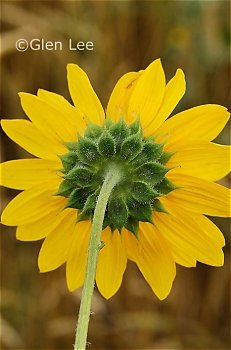
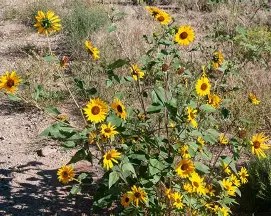
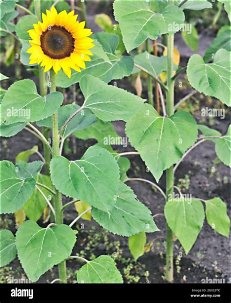
Description: Annual to 2 m or higher with ovate leaves 6-30 cm long. Heads 6-10 cm wide, solitary. Disks purplish brown. Rays yellow. Outer phyllaries ovate, abruptly pointed. Has a rough, hairy, erect stem. The leaves are broad, coarsely toothed, rough, and mostly alternate, with lower leaves often heart-shaped.
Field Identification: This is a common plant found in the field. It may cover large areas due to prolific seed production. It is an attractive flower, but the plant tends to be straggly and often with broken branches. It is an irritating plant to handle because of its rough stems and leaves.
Plant Trivia: Young sunflower buds exhibit phototropism, tracking the sun from east to west Contrary to common myth, mature flower heads donot follow the sun. Originally domesticated over 5,000 years ago in North America.
Occurrence: Common on clay or heavier sands in pastures, woods, wase places, fields, and stream lowlands. Native to the Great Plains and southwestern United States.
Bloom Period: Mar-Dec
Plant Use: Available as oilseed (for cooking oil) or confectionary (snacks and baking) varieties. A widely used vegetable oil. Seeds and oilcake are used for livestock and bird food. Native Americans used sunflower seeds for flour, oil, and dyes, and the plant has symbolic meanings of loyalty, joy, and optimism. Native Americans used sunflower seeds for flour, oil, and dyes, and the plant has symbolic meanings of loyalty, joy, and optimism.Doichotomous Key to the Genus Helianthus
Dichotomous Key to the Genus Helianthus:
-
Leaves opposite…………………………………………………..H. ciliaris

