Sideroxylon celastrinum
Family: Sapotaceae
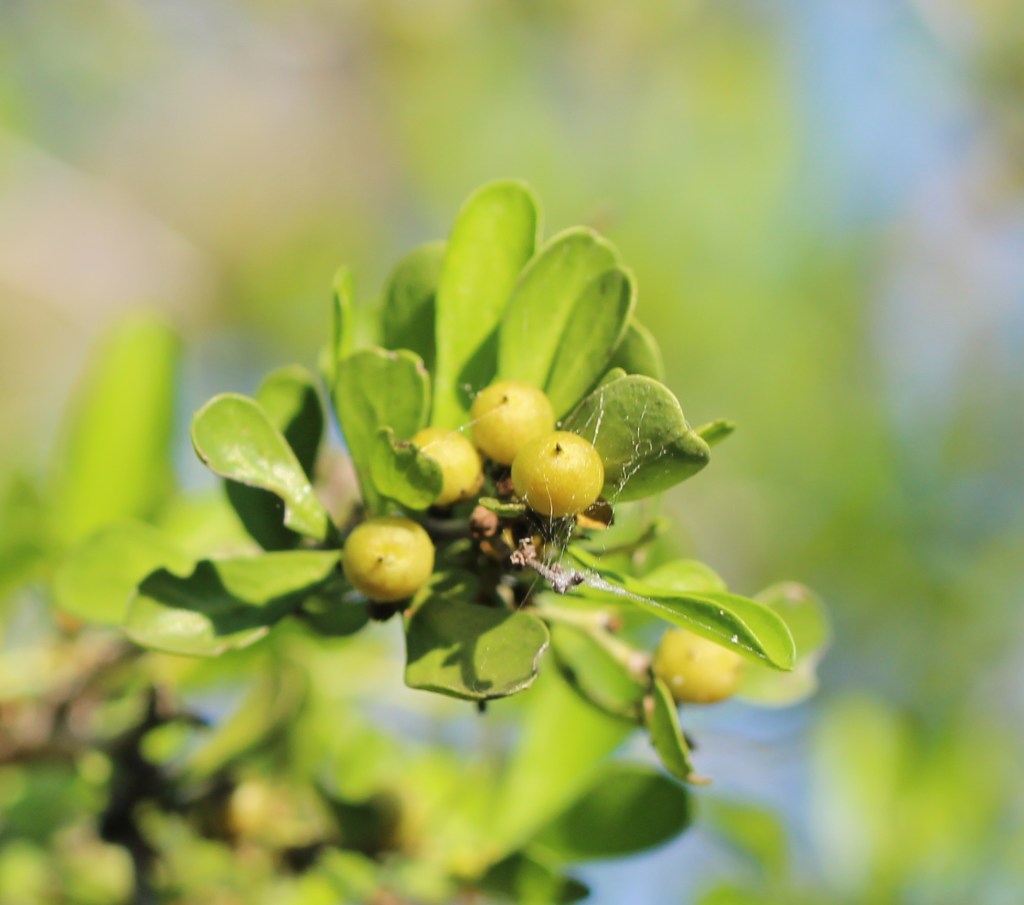
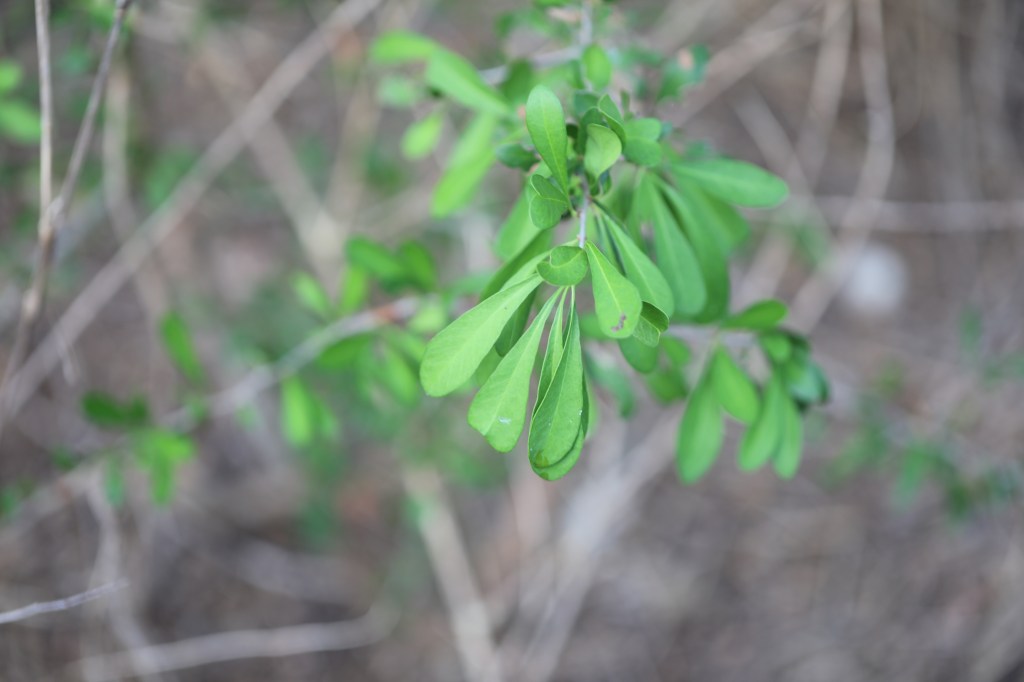
Plant Description: Spiny evergreen shrub or tree to 5 m or higher with clustered, dark green glossy, teardrop shaped alternate leaves. Bark is mottled gray to brown with long, sharp spines at the ends of the twigs. Leaves mostly oblanceolate or obovate, 1.5 cm long. Flowers in axillary clusters, the corolla 4-5 mm long, white to creamy. Fruits 1.5-2 cm long, blue-black, edible.
Field Identification: In late winter, it may be the only green tree visible and appears similar to a live oak tree with thorns.
Plant Trivia: Fruit is eaten Mexico and is used as an aphrodisiac. The heartwood is occasionally used in cabinet work. Coma may also be used as an ornamental tree. During lean economic times, the fruit is eaten by children as chewing gum. Sweet fragrance of plants in bloom can be detected from long distances.
Occurrence: Occurring on sandy and clayey loams or sometimes shell, mostly in brushy thickets along ravines and bluffs near the coast.
Bloom Period: July – December
Plant Use: Seeds eaten by various birds including white-winged doves, chachalacas, and mammals including raccoons and coyotes; leaves browsed by white-tailed deer.
Key to the Genus Sideroxylon:
- Leaves glabrous or nearly so………………...S. celastrinum
Leaves woolly beneath……………………...S. lanuginosum

