Triadica sebifera
Family: Euphorbiaceae
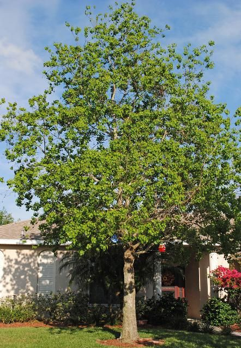
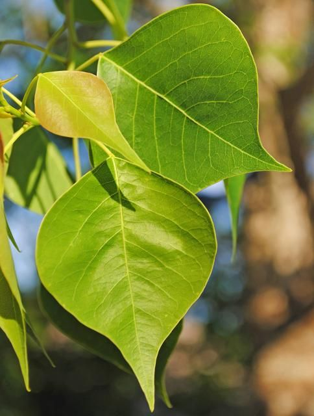
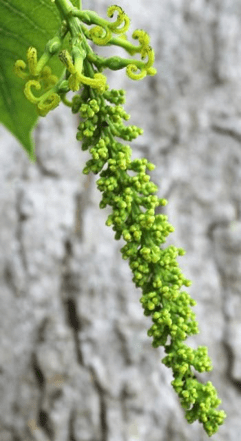
Description: INVASIVE Tree. Chinese tallow is a single or multi-trunked tree with a spreading, oval-shaped canopy. Deciduous. The bark is roughly wrinkled and light to dark gray in color. The leaves are waxy and diamond-shaped with smooth leaf margins. Leaves 5-6 cm long, simple, alternate with smooth margins, heart shaped and pinnate. Chinese tallow flowers are white to greenish yellow in color and have no petals. Flowers are numerous and occur on 8-inch spikes at the end of a single branch after leaves have emerged in spring. Fruits are three-lobed capsules that turn from green to brownish black. When the fruits are mature, the outer capsule falls away, revealing three round white seeds which superficially resemble popcorn, hence it’s other common name, popcorn tree.
Field Identification: This is a deciduous tree that grows to 60 feet tall and can produce a trunk 3 feet in diameter. Its leaves are spade shaped. In spring dangling, yellowish flower spikes yield small clusters of three-lobed fruit in fall and winter that split to reveal popcorn-like seeds. Its leaves reliably turn red in fall, one reason the tree is widely planted.
Plant Trivia: Introduced to the United States in the early 1700s, the Chinese Tallow is a prolific seed producer from early in life and outcompetes native trees. The tree severely impacts riparian and wetlands by changing water chemistry. It increases the rate dissolved nutrients, such as phosphates, enrich the water which results in the water’s dissolved oxygen being depleted and causing death of aquatic life. Leaves, fruits and white sap are toxic to humans, dogs, cats, and horses. The tree crowds out native plants and forms a monoculture.
The tree gets its name from the white, waxy tallow covering the seeds. This tallow has been harvested for use in making candles, soap, cloth dressing, and fuel for the last 14 centuries in China. It was originally introduced to the United States by Benjamin Franklin, who shipped seeds to some of his associates in Georgia. These seeds entered through the port in Charlestown, South Carolina, in 1776. The USDA continued to promote tallow tree establishment in Gulf Coast states to promote local soap industries in the early 1900s. This endeavor was ultimately unsuccessful, and abandoned orchards were left to spread into surrounding forests
Occurrence: Native to China and Japan. Illegal to sell, distribute or import into Texas.
Bloom Period: Spring
Plant Use: “Tallow Tree” refers to the wax produced by the seeds which has been used for soap making and candles.
 stxflora