Melia azedarach
Family: Meliaceae
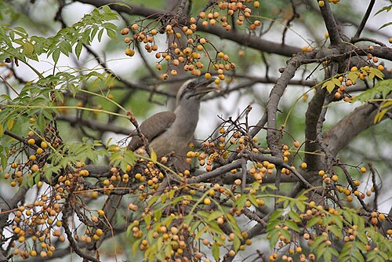
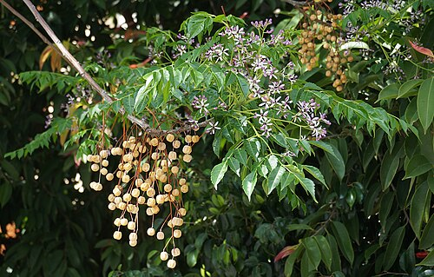
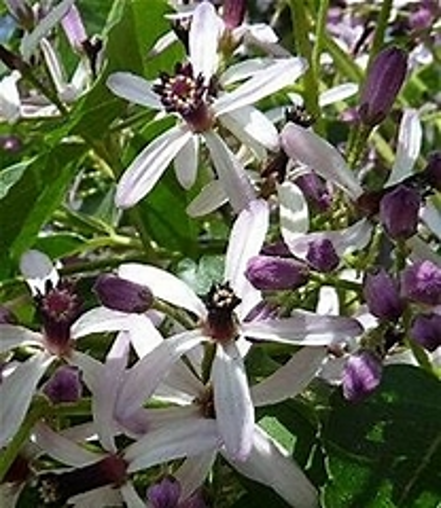
Description: Deciduous, perennial, round topped tree to 13 meters tall. Leaves bipinnate, . Flowers in panicles, the lavender-lilac petals about 1 cm long. Leaves can grow up to 2 feet long, are arranged alternately along the stem, bipinnately compound, dark green and toothed. Flowers are pink to purple (often lilac colored) and arranged in numerous small clusters that bloom in spring. Chinaberry produces numerous yellow to yellow-green wrinkly drupe fruits that are about 2-2.5 cm in diameter. The bark is brown with narrow furrows which give a striped appearance.
Field Identification: Old and young trees are characterized by large twice pinnate leaves, straight trunk that is slightly glossy. Conspicuous grape-like clusters linger on tree through the fall.
Plant Trivia: Fruit (berries are poisonous). Native of Asia. This plant is poisonous to humans, livestock, and mammals if ingested. Trees reproduce by suckers and viable seeds (up two years viability).
Occurrence: Originating in China and Japan this tree has spread throughout tropical and sub-tropical areas worldwide.
Bloom Period: March-April
Plant Use: Commonly planted for shade and escaping to stream bottoms, ditches, and waste places becoming invasive. Chinaberry trees have historically been used as an ornamental plant, as a shade tree, and for firewood. The species has also been used as a traditional herbal medicine. A diluted infusion of the leaves has been used in the past to induce uterine relaxation. The tree’s limonoid compounds have useful anticancer and antimalarial effects.
 stxflora