Typha domingensis
Family: Typhaceae
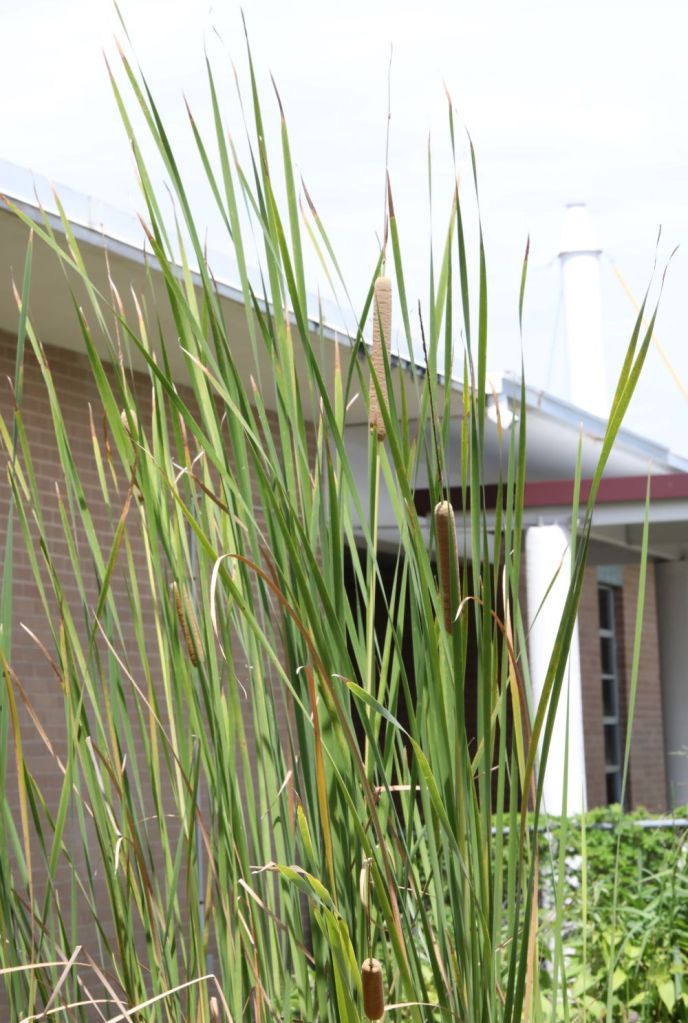
Plant Description: Perennial, 1-2.5 m cm high, forms colonies. Leaves linear. Flowers minute, unisexual, the male in a tail-like spike 2-4 m above the cylindroid light-brown female. Grow from rhizomes. Leaves are 2-ranked (two vertical rows). Sheathing leaves are flat, linear, sessile.
Plant Trivia: Can tolerate brackish waters to salinities to 3.5 ppt
Field Identification: Tall grass-like plant with a terminal cigar-like structure.
Occurrence: Common in fresh or brackish soils, mostly in ditches, swales, and marshes and along stream and lake banks. Requires wet environment.
Bloom Period: May-October
Plant Use: Plant rhizomes are used as a source of food for small mammals and geese. Insect-eating birds forage and nest among stands of cattails. Thick stands are good for filtering toxins and excessive nutrients from wetlands and as erosion control. Leaves are sometimes woven to make mats.
Key to species of Typha:
1. Male and female spikes separate………………………………………………..T domingensis
Male and female spikes adjoining………………………………………………………T. latifolia
 stxflora