Ricinus communis
Family: Euphorbiaceae
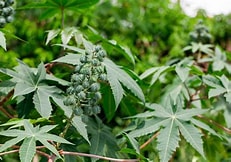
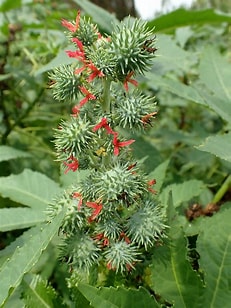
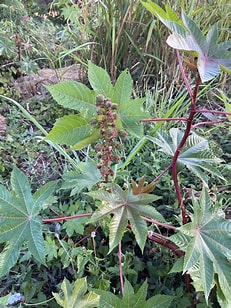

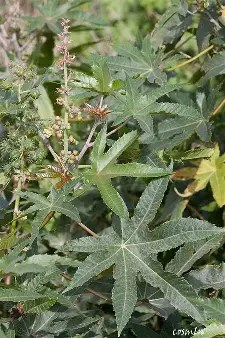
Description: Perennial or subshrub, 1-3 m high, with palmately lobed leaves 20-35 cm wide. Flowers are mostly in panicled racemes, unisexual.
Field Identification:
Plant Trivia: Examples found in the wild are plants that from cultivation. Seeds are poisonous. It produces inconspicuous flowers that develop into spiny seed capsules containing the highly toxic castor beans, which are rich in oil but also contain ricin, a potent toxin. The seeds contain ricin, one of the most toxic natural substances, which can be lethal if ingested. Even a few seeds can cause severe poisoning, leading to symptoms such as vomiting, abdominal pain, and diarrhea. Care should be taken when handling the plant, as contact with the foliage can cause dermatitis. It is advised to wear gloves and avoid planting in areas accessible to children or pets. It has another common name, palm of Christ, or Palma Christi, that derives from castor oil’s reputed ability to heal wounds and cure ailments. Each castor seed has a yellow nodule full of fats on one end of the seed that are nutritious for young ants. After hauling their harvest into their nests and pulling off the delicious part, ants discard the rest of the seed into their trash pile, where the future plant starts to grow. Invasive.
Occurrence: Found along stream bottoms, coastal woods, and waste places. Indigenous to the southeastern Mediterranean Basin, East Africa, and India, but now widespread in tropical and subtropical regions worldwide.
Bloom Period: June-November
Plant Use: The seeds are the source of castor oil, which is used in various industries, including pharmaceuticals, cosmetics, and manufacturing. seeds contain 40–60% oil that is rich in triglycerides mainly ricinolein. The seed also contains ricin, a highly potent water-soluble toxin. Also, it grown as an ornamental plant in gardens and parks. Global castor seed production is around two million tons per year. Leading producing areas are India (with over three-quarters of the global yield), China and Mozambique, and it is widely grown as a crop in Ethiopia. There are several active breeding programs. Casor Bean has a long history of human use dating from over 4000 years ago through today. It is well worth Googling .
 stxflora