Phoenix canariensis
Family: Arecacaceae
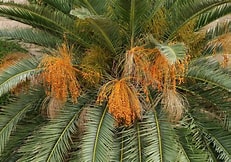
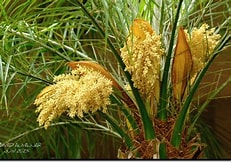
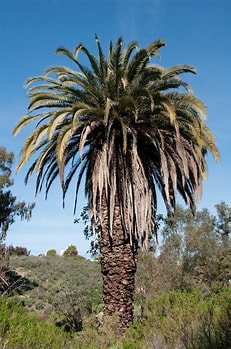
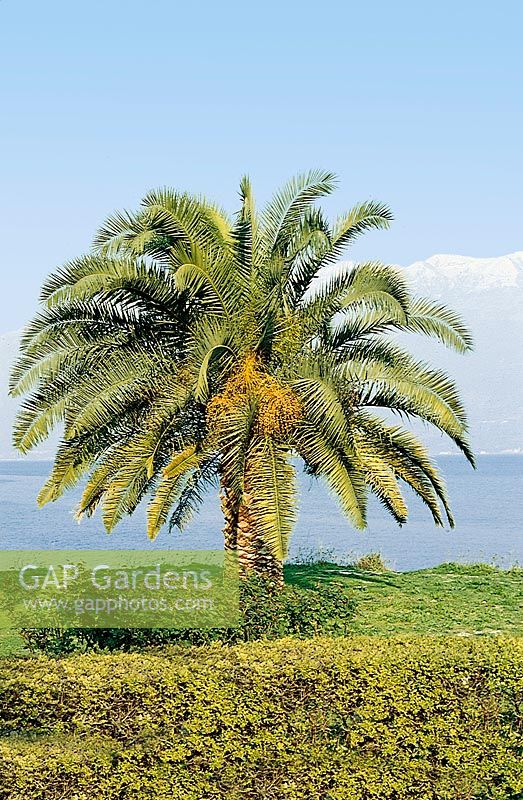
Description: is a large, slow-growing ornamental palm with a distinctive pineapple-like trunk and feathery pinnate leaves, suitable for temperate and subtropical gardens. reaching heights of 10–20 m (33–66 ft), with the tallest recorded at 36 m (118 ft) and a spread of up to 3–5 m in ideal conditions. Its&nbs p;pinnate leaves are 4–6 m long, with 80–100 leaflets per side, forming a rounded crown. The trunk develops a&nbs p;pineapple-like appearance over time as old leaf bases remain attached
Field Identification:
Plant Trivia: Prune to remove brown or downward-facing fronds at the base; avoid cutting upward-facing leaves to prevent growth issues.
Phoenix canariensis is extensively cultivated in warm temperate regions as a street tree or garden plant. The leaflets are used in much the same way as those of P. dactylifera for a range of woven products including crosses for Palm Sunday celebrations. Inflorescence buds are tapped for the sweet sap which is eaten as palm honey. Mifsud (1995) reported an unusual use for leaves of P. canariensis in Malta where fishermen attract pilot and dolphin fish by floating two or three palm leaves on the sea surface near their nets. These fish species are known to congregate under floating objects and so are easy prey beneath the palm leaves. (S.C. Barrow. 1998)/Palmweb.
Occurrence: Native of the Canary Islands, but is grown in many tropical and semitropical areas of the world. It is adapted to more habitats and soils than almost any other palm. This, combined with its relative hardiness to cold, makes it one of the most widely planted palms on Earth.
Bloom Period: Spring – Summer
Plant Use: Produces oval yellow to orange fruits about 2 cm long, containing a single seed; the pulp is edible but not a true date. Landscaping. the sap of the date palm is used to make palm syrup. La Gomera is the only island where the syrup is produced in the Canary Islands. Leaves are used for weaving and in the Christian festival of Palm Sunday.
Propagation: Is propagated exclusively by seed, sown at temperatures above 25°C for optimal germination.

