Celphalanthus occidentalis
Family: Rubiaceae
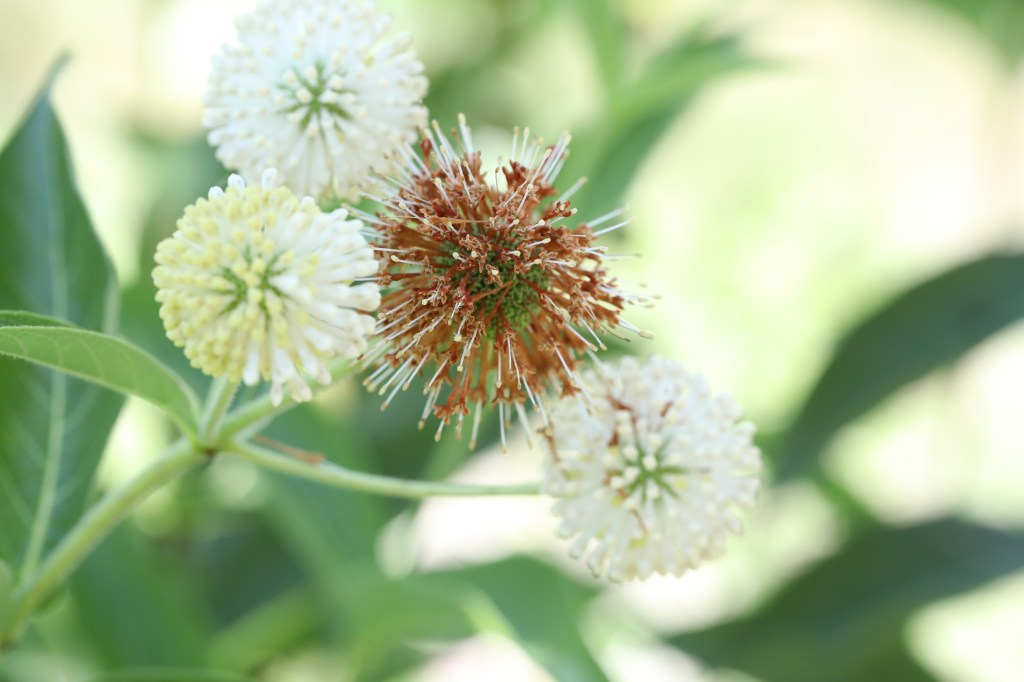
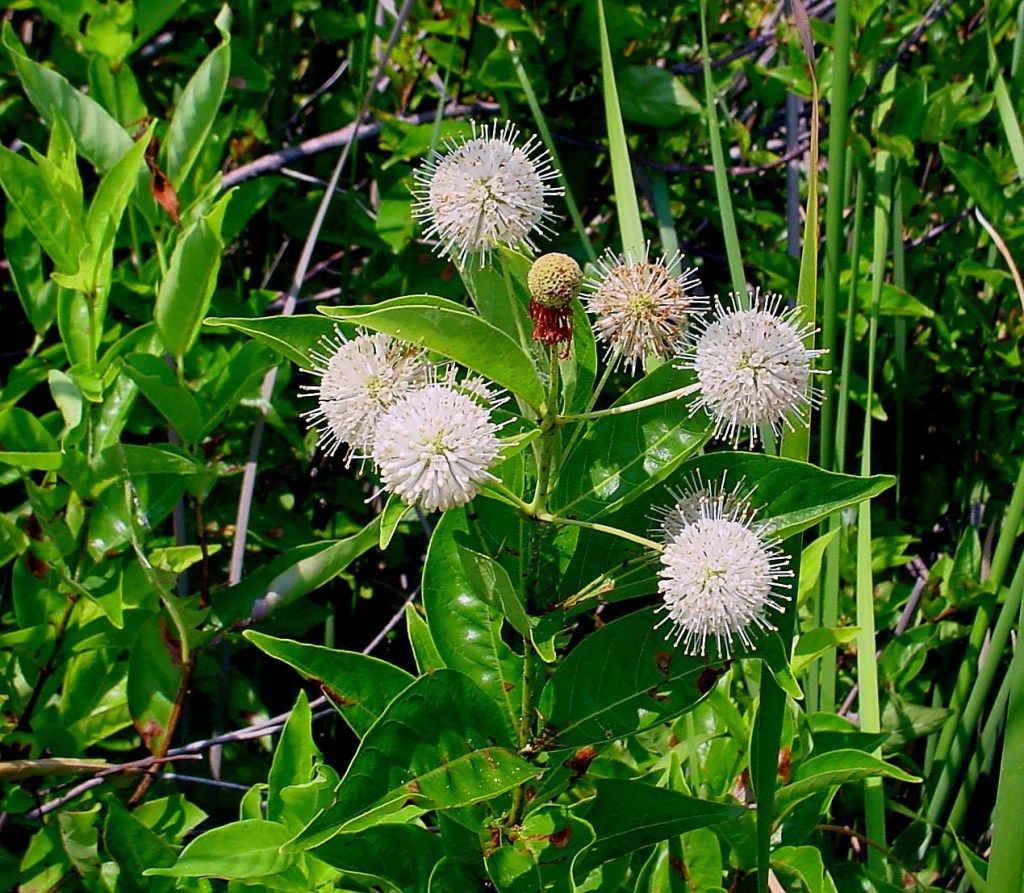
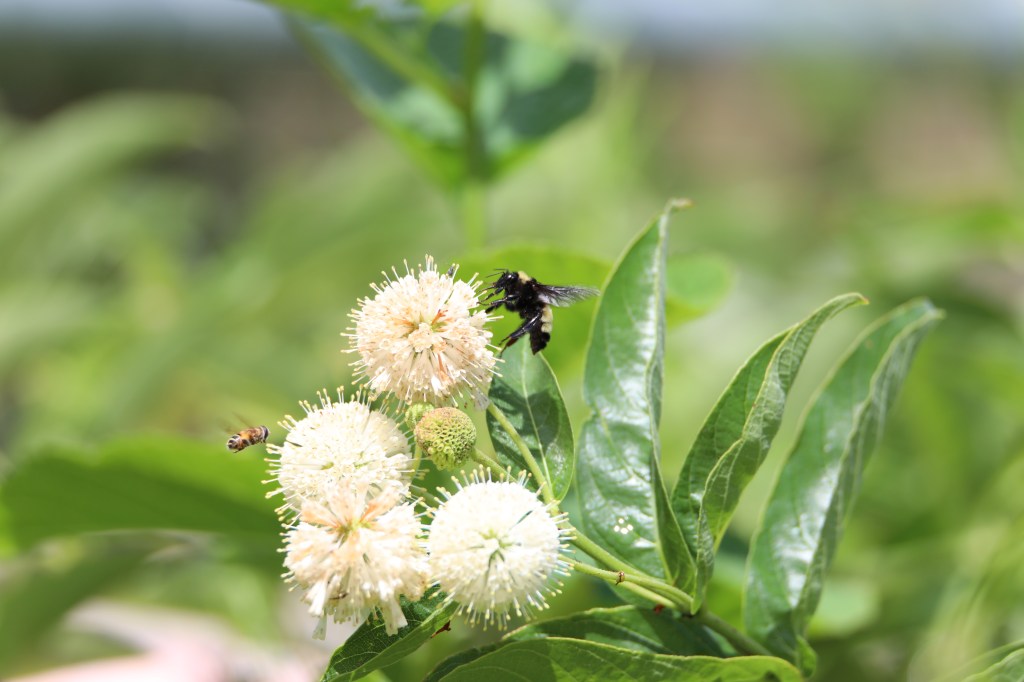
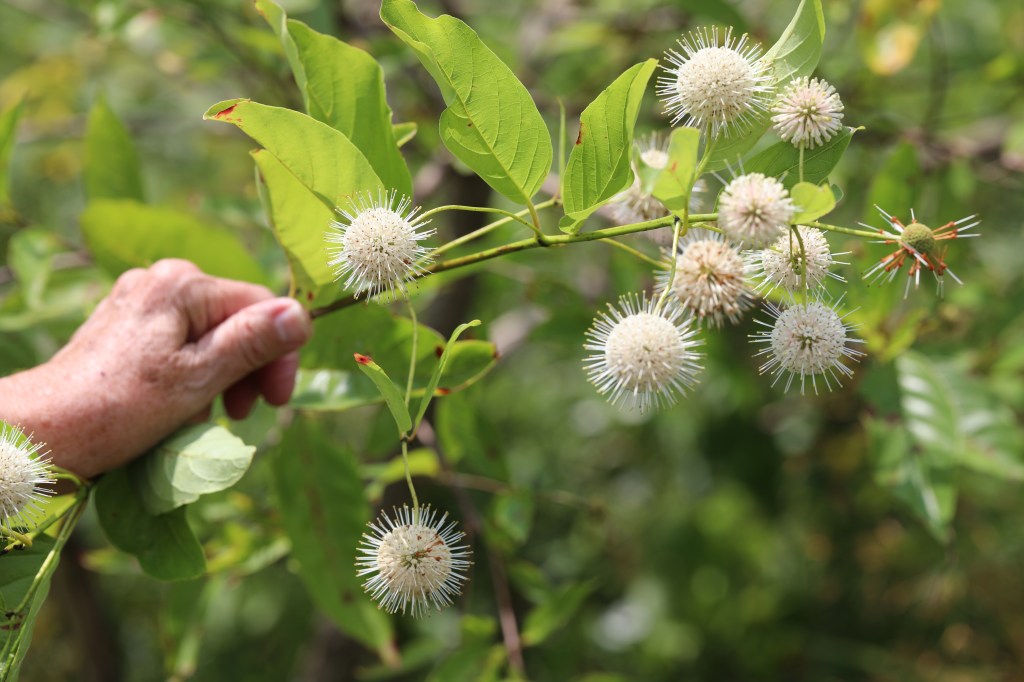
Plant Description: Deciduous shrub or small tree to 3 m or higher. Leaves are large (6-17 cm long), ovate-oblong, opposite and shiny. Leaflets are small and line the edge of a central leaf rachis. Leaves may be in pairs or triplets growing from nodes. Leaves, twigs and stems are all green with chlorophyll. Flowers in globose heads. Corolla 5-8 mm long, white. The many-stamened ball of the flower provides nectar for nectar eating animals.
Plant Trivia: This is a strong rooted riparian plant. The dried seedball floats and is dispersed in waterways by floating downstream or wind-blown on surface of ponds or lakes.
Field Identification: fragrant flower. Inflorescence is a cream white ball with many stamens radiating outward.
Occurrence: Frequent along streams, lake banks, or in swales and marshes.
Bloom Period: May-September
Plant Use: Flowers are good nectar source. Attractive landscape plant around a water feature. Larval host: Titan Sphinx, Hydrangea Sphinx.
Dichotomous Key to the Genus Parkinsonia:
- Pinnae to 10-30 cm long, leaflets numerous………..P. aculeata
Pinnae 1-3 cm long, leaflets, few pairs……………………..P. texana

