Linum lewisii
Family: Linaceae
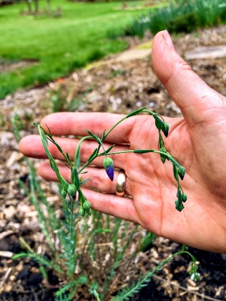
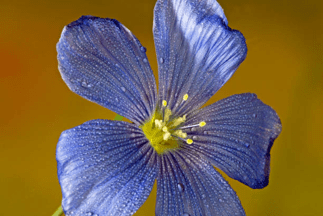
Description: Herbaceous, perennial reaching height of 30 to 45 cm tall. Stems tend to lean at an angle. It is leafy when the plant is young, gradually losing its leaves as it matures. Leaves are linear to narrowly lanceolate. Each stem produces several saucer-shaped flowers, blooming from the bottom up, each one lasting only a day. Flowers are pale blue, with 5 petals, veined in darker blue. The fruit is a round, smooth, shiny brown capsule. Forb/herb, subshrub; stems commonly erect and branched, glabrous.
Leaves: Green; alternate, linear to lanceolate, glabrous, semi-evergreen. alternate, linear, numerous, 1-3 cm long and about 2 mm broad, 1-nerved, pointed to rounded, slightly smaller upwards on the stem.
Field Identification: Erect plant bearing drooping flower inflorescences. Leaves attached to main stem with very little branching. Hairless and somewhat bluish-waxy-coated perennial 10-60 cm tall, with several stems, branching above, from a woody root crown.
Plant Trivia: Plants of this species are likely garden escapees. It should not be eaten raw because it contains cyanide, but this is destroyed in the cooking process.
Occurrence: Plant of North and West Texas. Grows best in rocky, sandy or gravelly, well-drained soils
Bloom Period: spring – summer
Plant Use: The seeds of western blue flax are edible cooked. They have a pleasant, nutty taste and are very nutritious. The seed has a high oil content and can be eaten on its own or used as a flavoring.
 stxflora