Oenothera drummondii
Family: Onagraceae
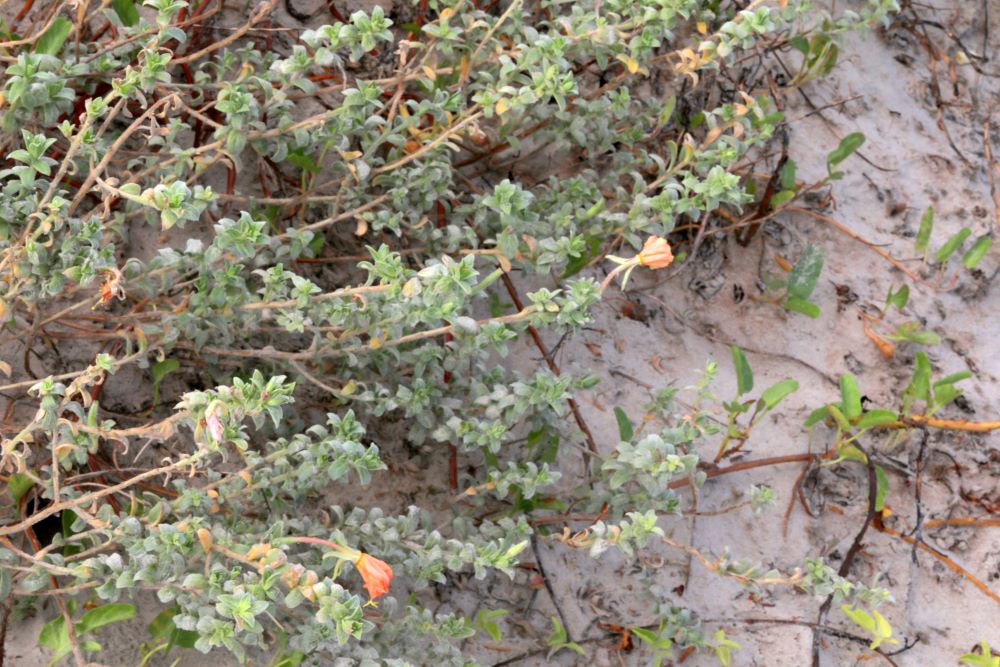
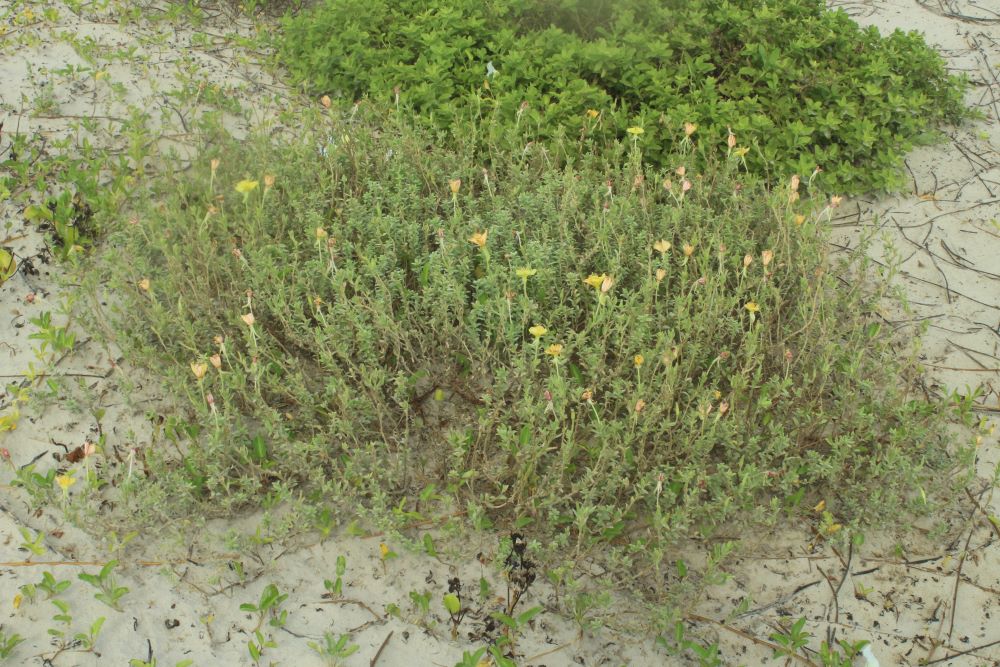
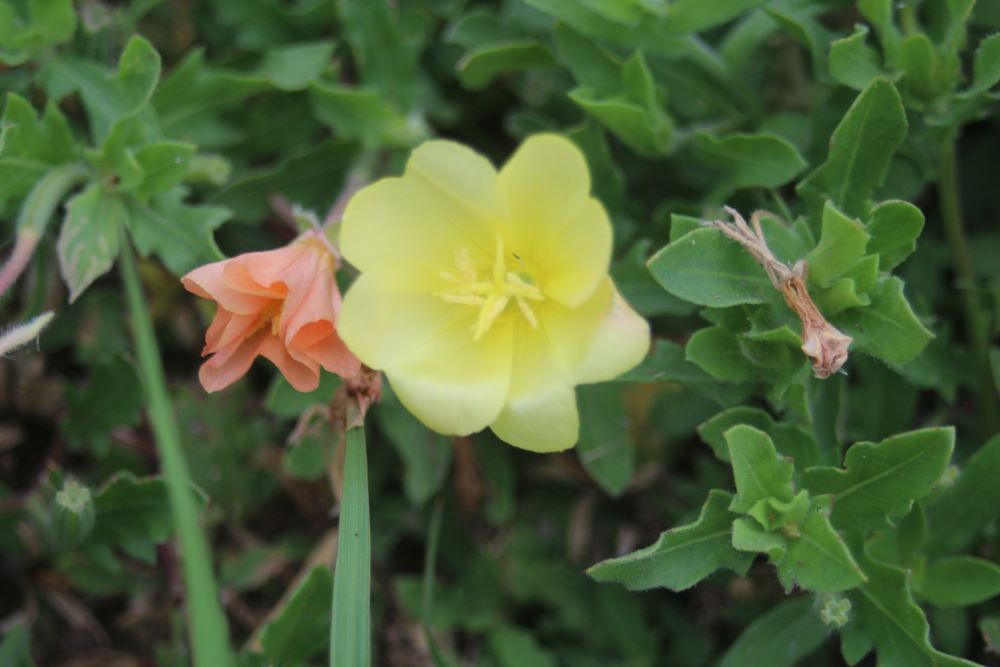
Plant Description: Hairy perennial to 75 cm high with upright to spreading, woody stems. Leaves 1-7 cm long, mostly oblanceolate or obovate, grayish with soft pubescence, alternate, margins smooth. Flowers radial with 4 petals, in upper axils, the petals 2.5-4 cm long, yellow, fading to orange. Ovaries inferior.
Plant Trivia: “Named for Thomas Drummond, (ca. 1790-1835), naturalist, born in Scotland, around 1790. In 1830 he made a trip to America to collect specimens from the western and southern United States. In March, 1833, he arrived at Velasco, Texas to begin his collecting work in that area. He spent twenty-one months working the area between Galveston Island and the Edwards Plateau, especially along the Brazos, Colorado, and Guadalupe rivers. His collections were the first made in Texas that were extensively distributed among the museums and scientific institutions of the world. He collected 750 species of plants and 150 specimens of birds. Drummond had hoped to make a complete botanical survey of Texas, but he died in Havana, Cuba, in 1835, while making a collecting tour of that island.” https://www.wildflower.org/
Field Identification: This is a sprawling, gray-green plant bearing many single terminal, bright yellow blooms that quickly fade to orange during the day.
Occurrence: Common in dunes of barrier islands, occasionally found along bay beaches.
Bloom Period: March – December
Plant Use: Used to treat sore throat and eye diseases
Key to the species Oenothera is found in Plants of the Texas Coastal Bend by Roy L. Leyman, Ruth O’Brien, and Tammy White

