Cardiospermum halicacabum
Family: Sapindaceae
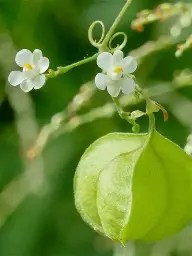

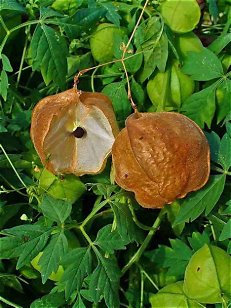
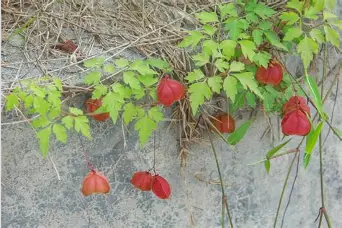
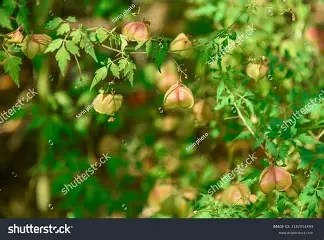
Description: Annual vine with stems to 2 m or longer. Leaves compound with most of the toothed or lobed leaflets 1-5 cm long, which are ovate to lanceolate in shape, with finely toothed margins, all in 3s. Flowers in clusters, the white petals 3-4 mm long. Fruits about 3 cm wide, inflated. The small, white flowers are often inconspicuous, but they produce distinctive inflated, papery capsules that resemble balloons or hearts. Each capsule contains three smooth, black seeds with a characteristic white heart-shaped marking.
Field Identification: The slender, grooved stems are hairy bald to sparsely downy. The four white to yellowish petals are obovate and about 3 mm long, the upper two are each adorned with woolly scales and the lower two have large, leaf-shaped scales and two glands. A noticeable feature of the individual seeds is a large, light heart-shaped spot on the otherwise almost black seed.
Plant Trivia: The generic name Cardiospermum, which translates to “heart seeds”, was given due to its large, black seeds, the white mark of which is reminiscent of a stylized heart. The specific epithet halicacabum comes from the Greek word for salt barrel and refers to the inflated fruits, after which the common name balloon vine is derived.
Occurrence: Frequent along streams and ditches and around lakes. It is widely distributed across tropical and subtropical regions, including parts of Africa, Australia, South Asia, and North America.
Bloom Period: May- Nov
Plant Use: The plant has a long history of use in traditional medicine. It is believed to possess anti-inflammatory, analgesic, and antiseptic properties. Various parts of the plant, including leaves and seeds, have been used to treat conditions such as fever, colds, skin eruptions, and joint pain. The young leaves and shoots can be cooked and consumed as a vegetable, adding nutritional value to local diets. serves as a host plant for various butterfly species, providing food for caterpillars. Its flowers attract bees, wasps, and other pollinators
Dichotomous Key:
- Leaflets densely pubescent beneath………….C. corundum
Leaflets glabrous or slightly pubescent…C. halicacabum
 stxflora