Centaurea cyanus
Family: Asteraceae
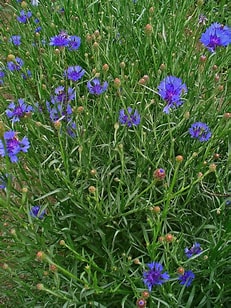
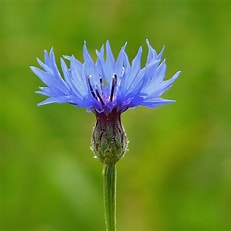
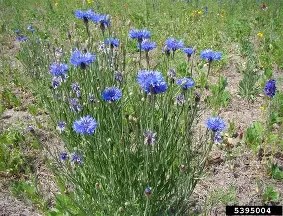
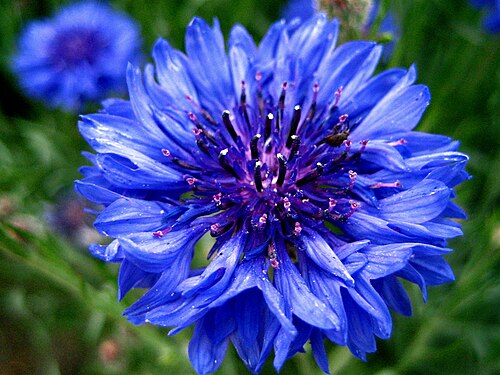
Description: Annual reaching aheight: 12–39 inches (30–100 cm) depending on variety and conditions. Leaves are grey-green, slender, lanceolate leaves. Flowers are small, thistle-like, with ray florets in blue, pink, purple, white, or two-toned colors; most common is intense blue.
Field Identification: Requires full sun and neutral (pH 6.6–7.5) to mildly alkaline (pH 7.6–7.8), moist and well-drained soil. However, it is quite tolerant to drought once established
Plant Trivia: Historically, they were believed to capture a bachelor’s heart, linking them to romantic folklore. In the Victorian era, they represented celibacy, while today they continue to embody delicacy and the beauty of things. Additionally, bachelor buttons hold national significance in countries like Estonia and Germany. Also known as cornflower because of its prevalence in cornfields in its native Europe.
Occurrence: Nonnative. Europe. Grows in most climates and soils. Has been naturalized in many countries.
Bloom Period: Spring
Plant Use: Cut flowers, cottage gardens, pollinator-friendly plants (attract bees, butterflies, and ladybugs). can be eaten raw, dried or cooked. Dried petals are used in foods, including spices. Their main purpose is to add color to food. There are cheeses or oils that contain raw petals. Petincluding added to salads, drinks, and desserts for garnishing purposes in raw or dried form. Dried petals are also used in teas and other beverages.
Propagation: Seed broadcasting by people or nature over soil.

