Platanus occidentalis
Family: Platanaceae
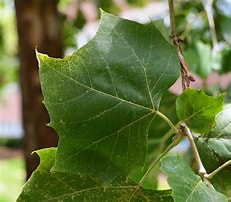

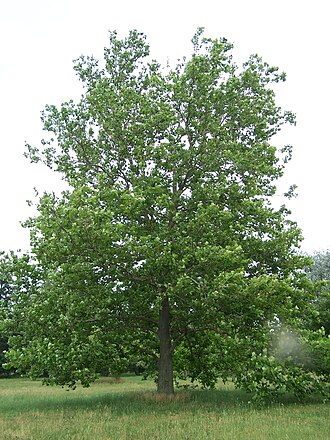
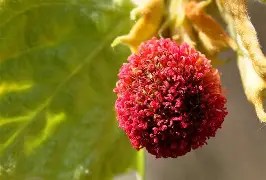
Description: Deciduous tree to 20 meter high with palmately lobed, alternate leaves 12-25 cm long. Flowers in drooping heads, the sepals and petals minute. The bark is one of the most distinctive features, exfoliating in large, irregular pieces to reveal a creamy white inner bark, which gives the tree a mottled appearance. The leaves are large, typically 3 to 5 lobed, and can be 10 to 25 cm (4 to 10 inches) wide. They turn yellow-brown in the fall.
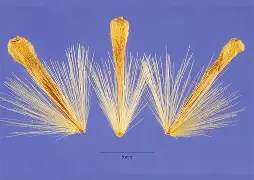
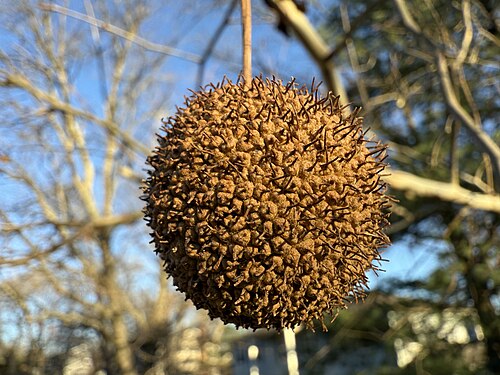
Field Identification: This is a large, fast-growing deciduous tree, recognized for its distinctive mottled bark and broad crown. This tree can grow to heights of 23 to 30 meters (75 to 100 feet), with some specimens reaching up to 46 meters (150 feet). The trunk can be 0.9 to 3 meters (3 to 10 feet) in diameter, making it one of the largest trees in eastern North America. The tree produces small, non-showy flowers in clusters, with male flowers being yellowish and female flowers reddish. The fruit is a round, spiky ball that contains numerous seeds, which are dispersed by the wind.
Plant Trivia: May live for 200 to 600 years. The species epithet occidentalis is Latin for “western”, referring to the Western Hemisphere, because at the time when it was named by Carl Linneaus, the only other species in the genus was P. orientalis “eastern”), native to the Eastern Hemisphere. Confusingly, in the United States, this species was first known in Eastern United States, thus it is sometimes called eastern sycamore, to distinguish it from P. racemosa, which was discovered later in the Western United States and called western sycamore.
Occurrence: Native to eastern and central United States, extending into southeastern Canada and northeastern Mexico. It thrives in lowland areas, particularly along streams, rivers, and floodplains.
Bloom Period: Mar-Apr
Plant Use: The wood of the American sycamore is valued for its strength and is used in furniture and cabinetry. The tree is also commonly planted as a shade tree in urban areas due to its broad crown and aesthetic appeal. It provides habitat and food for various wildlife, including birds and small mammals
Dichotomous Key: This is the only Genus of this family in N. America
 stxflora