Palmer Amaranth; Carelessweed; Pigweed
Amaranthus palmeri
Family: Amaranthaceae
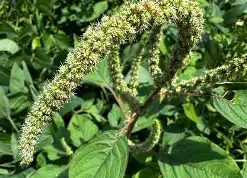
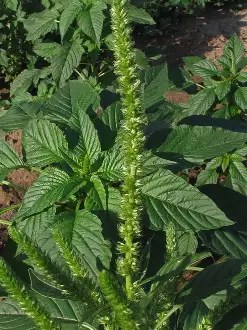

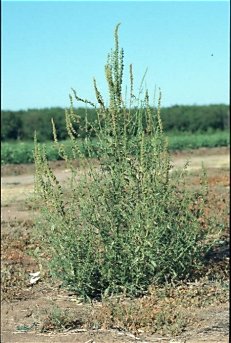
Description: Annual to 1.8 m high with ovate, ovate-rhombic, or lanceolate leaves 3-17 cm long. Male tepals 3.5-4 mm long, pointed.
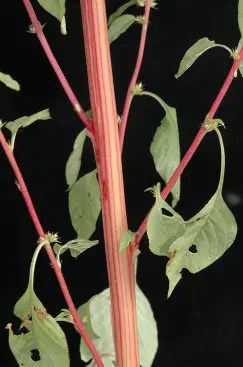
Field Identification: Robust, erect, stemmy plant without corolla; perianth of 2-5 distinct, stiff tepals; stamens 2-5. Superior ovary. Alternate leaves. Often with streaked, reddish stems. leaves are smooth and can exhibit a distinct white ‘V’ shaped watermark. The plant produces dense clusters of small, inconspicuous flowers that can be green, pink, or red.
Plant Trivia: Due to its aggressive growth and high seed production (up to 500,000 seeds per plant), it poses significant challenges in crop management and is considered a troublesome weed in many agricultural areas. In high nitrogen soils (fertilized crops or gardens) this plant may be toxic due to accumulation of oxalic acid.
Occurrence: Common to cultivated fields, pastures, woods and waste places. native to the southwestern United States and northern Mexico
Bloom Period: April-December
Plant Use: Historically, it has been used as a food source by Native American tribes, and its leaves and seeds are edible and nutritious
Dichotomous Key to the Genus Amaranthus may be found in Plants of the Texas Coastal Bend by Roy L. Lehman, Ruth O’rien & Tammy White.

