Hippeastrum spp.
Family: Liliaceae (Amaryllidaceae)
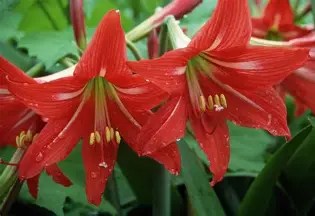
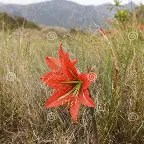
Description: This genus is a bulbous perennial with linear leaves. This plant is easily recognized by its large basal leaf habit. Leaves are trap-shaped, 12–20 in long, arranged in two rows. Flowers are large, trumpet-like, 6–10 cm across, in red, pink, white, or blends. Flowers for a tall umbel, the stem of which is hollow and easily bent or broken. This plant produces copious amounts of bulbs.
Field Identification: It is not expected to be found in the wild. It will be encountered aby bird and butterfly enthusiasts, however, since it is an easy plant to grown from bulbs and requires little care. It is a large green with a variety of colored trumpet -like flowers (depending on the hybrid variety) that forms an umbel of 3-6 flowers. It has 3 Petels and 3 sepals of the same color which is characteristic of the family.
Plant Trivia: Toxic to people and pets if ingested. In Victorian language of flowers, amaryllis represents love, beauty, determination, hope, and achievement. Toxic to people and pets if ingested.
Occurrence: Amaryllis in N. America are hybrids of Amaryllidaceae, which is native to S. and C. America.
Bloom Period: Win-Spr, but may bloom any time
Plant Use: Ornamental and landscape plant.

