Castela erecta
Family: Simaroubaceae
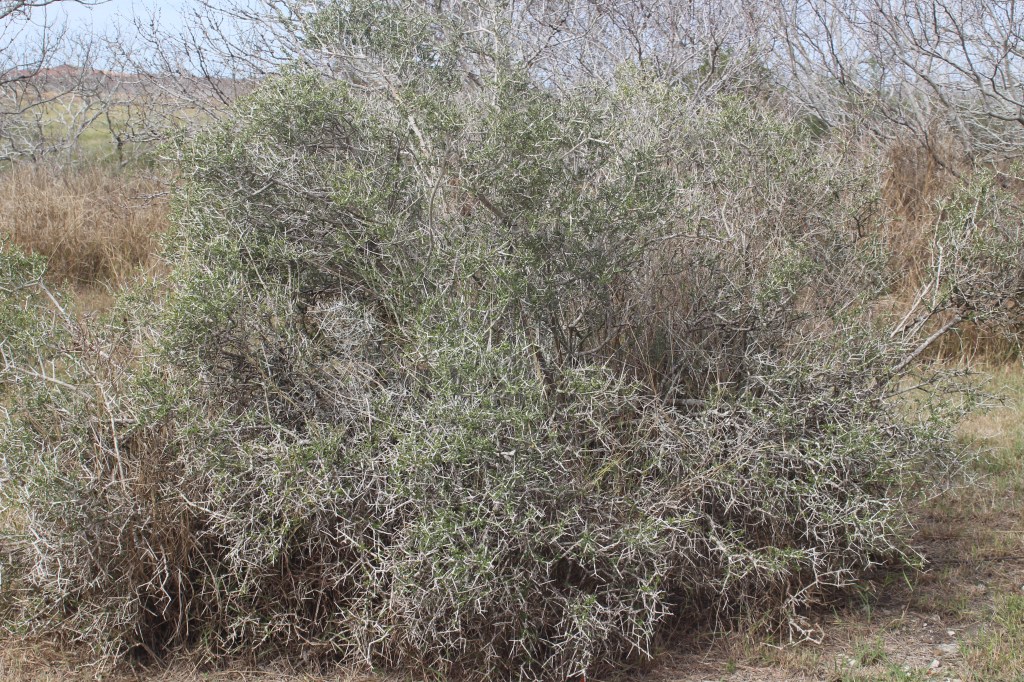
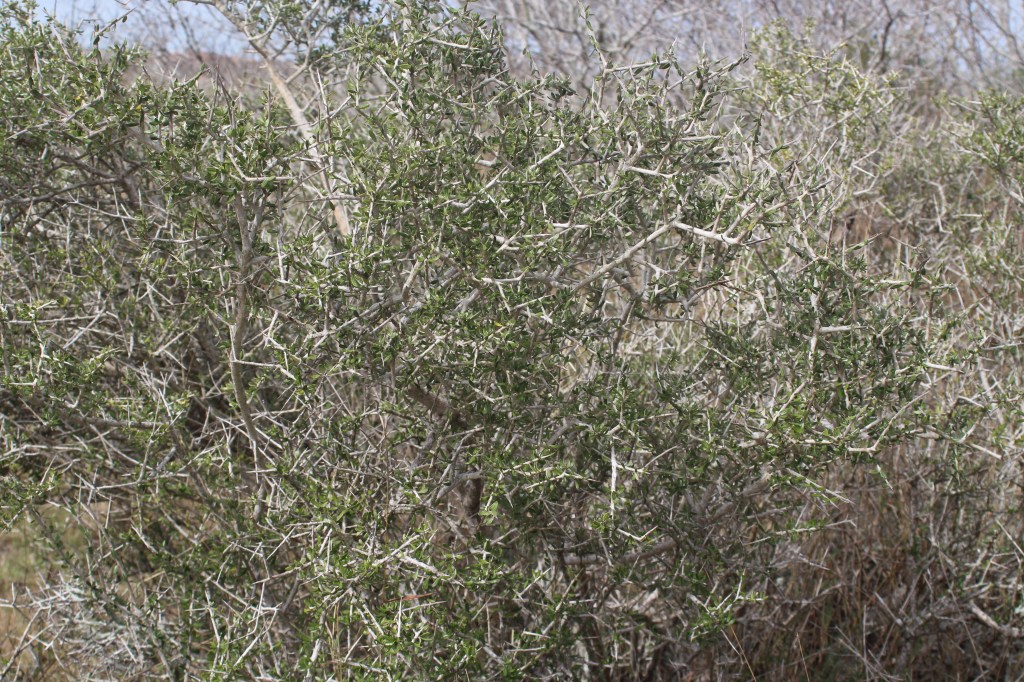
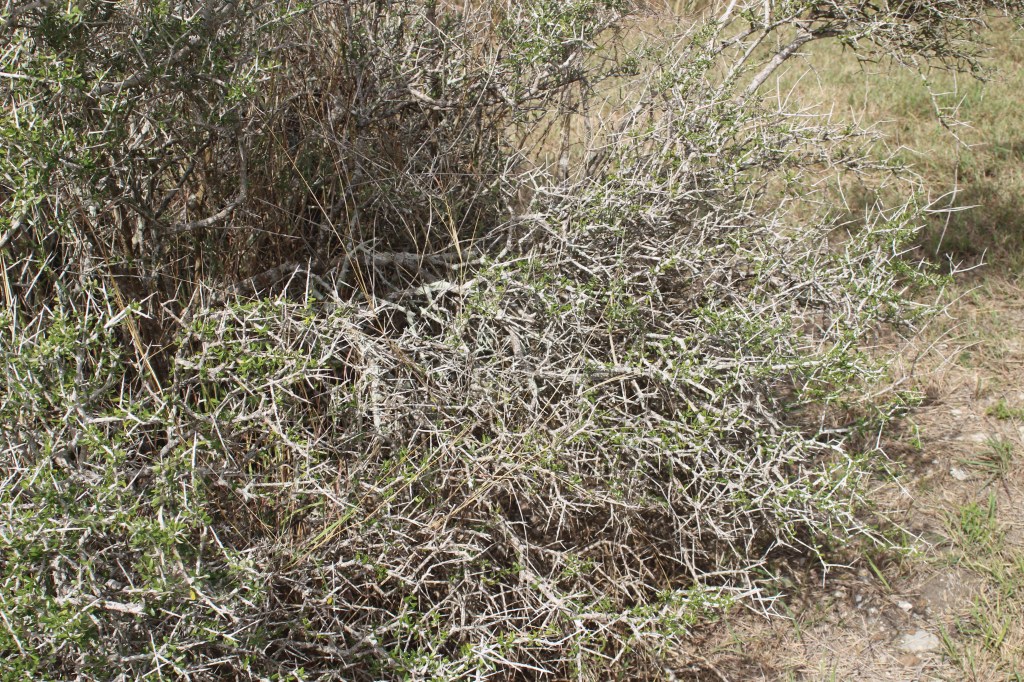

Plant Description: Spiny (thicket forming), multibranched evergreen shrub to 2.3 m high, the branches spine tipped. Leaves 8-15 mm long, linear or lanceolate, alternate, margins entire, shiny green on the upper surface, whitish on the lower surface, oblong. Leaves often appressed against the stem, sometimes fascicled at nodes. Flowers axillary, radial, the petals 4, reddish about 3 mm long, creamy yellow to pink or red. Fruits about 1 cm long, red, fleshy.
Plant Trivia: Ours is Castela erecta texana. “Amargosa” means “bitter” in Spanish. Other names include /Bisbirinda, Chaparro Amargosa,
Field Identification: Stout dense branches, gray with spines at end of branch. Often leafless or near leafless during Summer or drought. Round crown reaching the ground. Leaves, stems and fruit taste bitter. Can be confused with Lotebush, but Amargosa has silvery underside of leaves.
Occurrence: Occurring on better drained soils, usually on bluffs, ridges, and ravines.
Bloom Period: March-June
Plant Use: Leaves and fruit browsed by White-tailed deer. Frequently used as a nesting site by several bird species. Historically, it was a popular medicinal plant, with extracts used as remedies for such ailments as intestinal disturbance, fever, skin disease, yellow jaundice and dysentery.
 stxflora