Mahonia trifolioata
Family: Berberidaceae
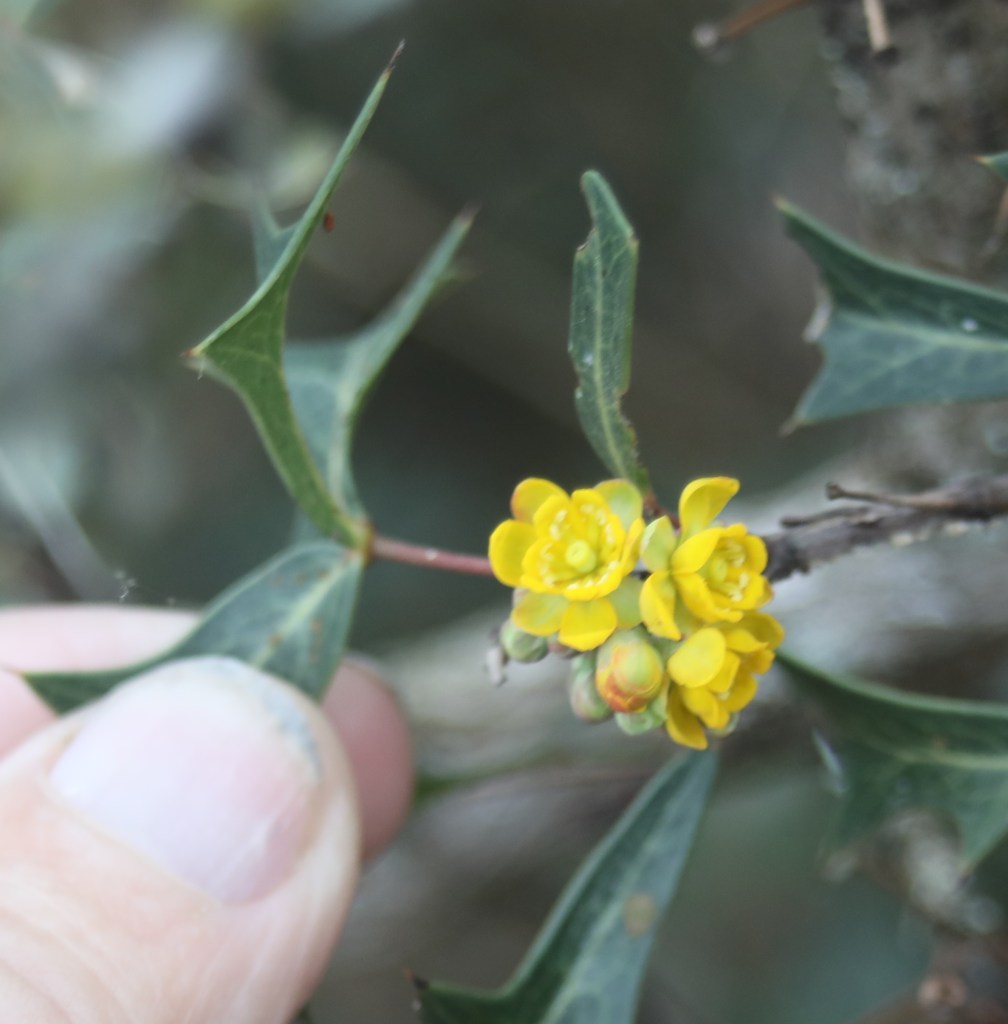
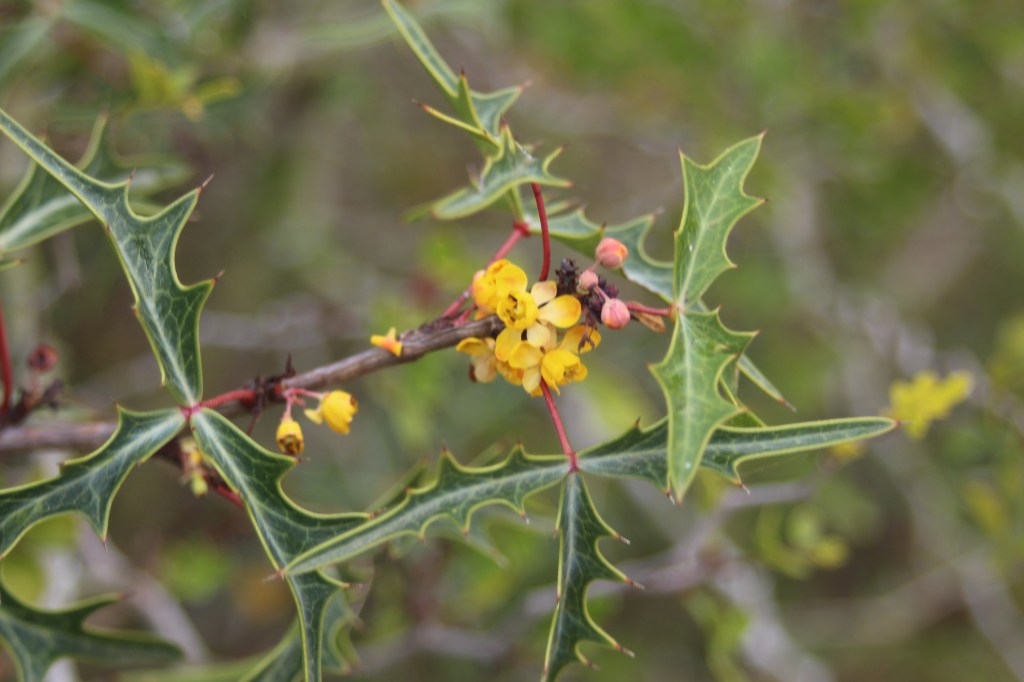
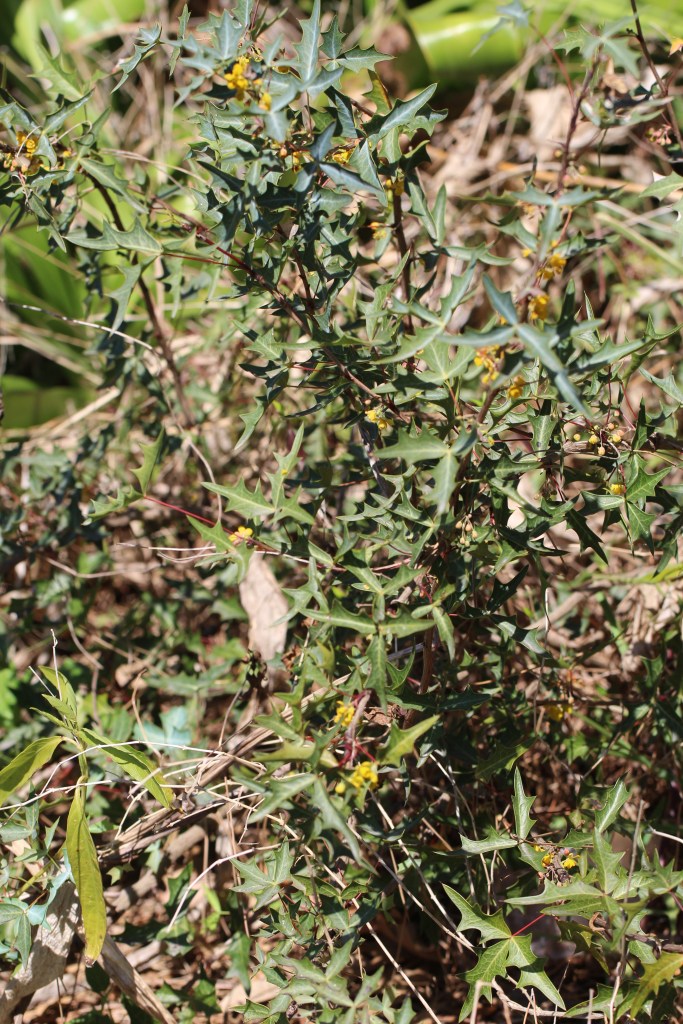
Plant Description: Evergreen shrub attaining a height of 2 m with tiff, spiny, holly like, trifoliate, alternate leaves.
Plant Trivia: Flowers pollinate by utilizing explosive anthers which when stimulated by buzzing sound explode covering the pollinator with pollen which will then be carried to the stigma of another flower. Agarito means “little sour” in Spanish. Early Texas pioneers found that the gray stems contained yellow wood which along with the root produced yellow dye. In 17th C, Nicholas Culper noted that hair washed in lye (sodium hydroxide) made of barberry ashes mixed with water would turn yellow; there have been barberry blonds ever sense.
Field Identification: Stiff plastic-like leaves with sharp ends; generally low growing
Occurrence: Chaparral, rocky slopes, thickets, open woodlands from coastal south Texas northwest and westward into the Trans-Peos
Bloom Period: February-April
Plant Use: Red berries make excellent jelly. Many birds and mammals are known to eat the fruit including cardinals, mockingbirds, racoons, opossums, gray foxes, and coyotes. The leaves are browsed by white-tailed deer. The reddish new leaf growth is tart and tasty and makes a unique garnish for salads.
 stxflora