Indian Mallow
Abutilon fruticosum
Family: Malvaceae
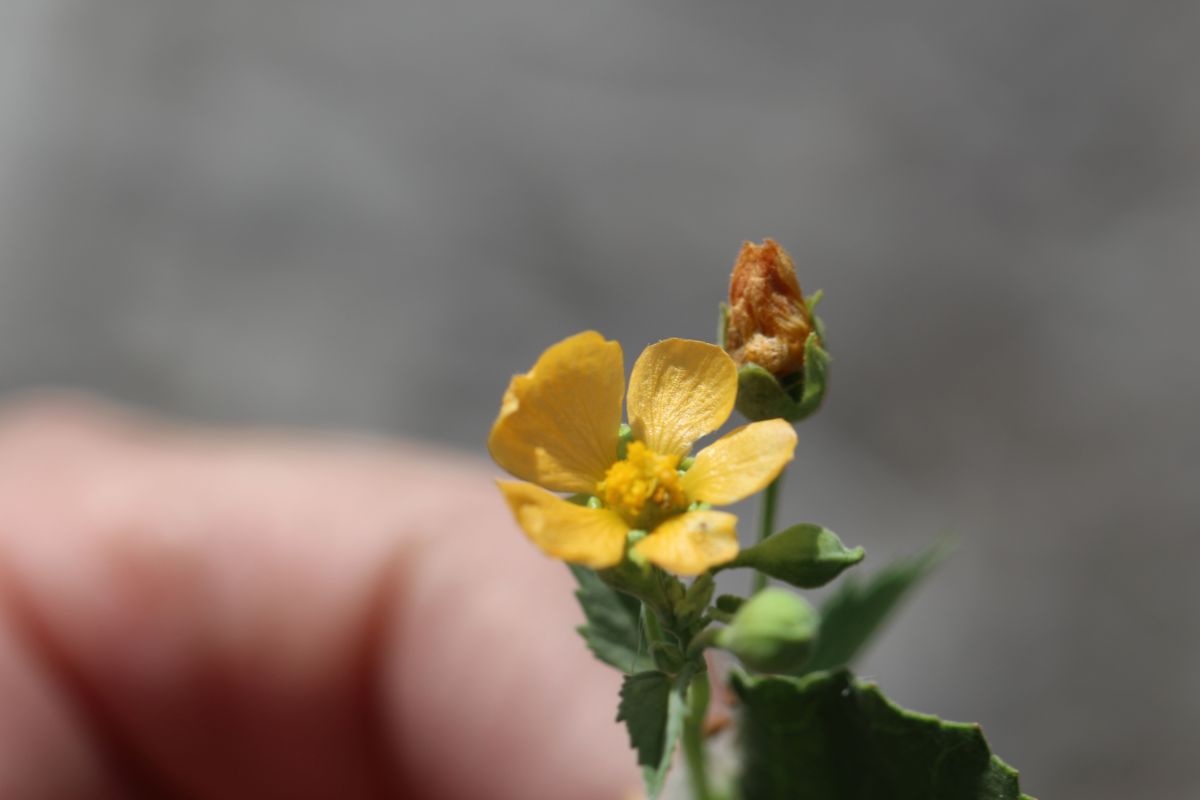
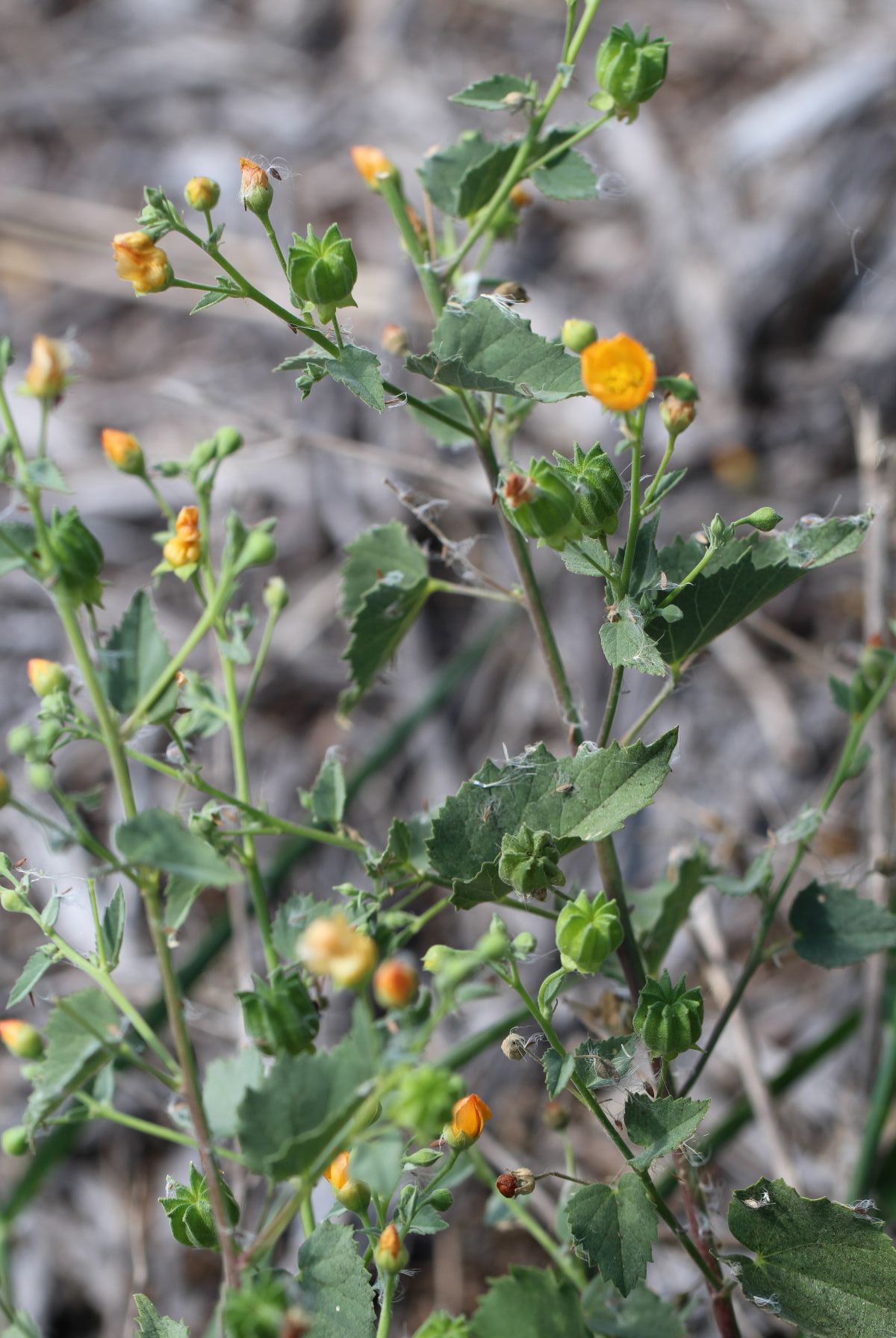
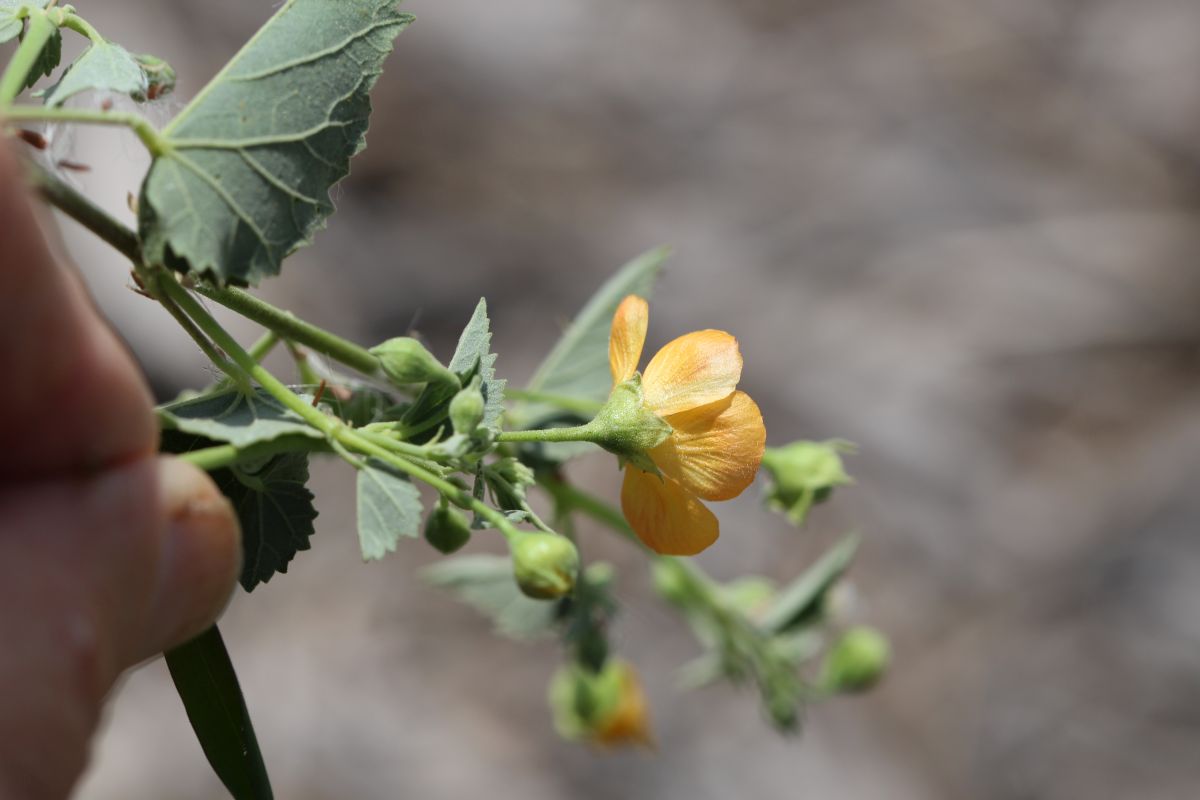
Plant Description: Herbaceous, perennial, 30-90 cm (1 to 3 ft) high, with heart-shaped leaves 3-12 cm (1.5-6 inches) long. Leaves thickish, mostly ovate-cordate, sharp to tapering point, irregularly serrated, with minute, star-shaped hairs underneath. Flowers solitary or in leafy panicles. Petals 8-12 mm (1 – 2.5 inches) long, orange-yellow to reddish.
Field Identification: Mid-summer bloomer (mostly in the late afternoon. Pale green leaves. Rounded bush. Covered with fine hairs giving it a grayish appearance.
Plant Trivia: Plants can be propagated (well-drained soil) by seeds and cuttings (in spring and summer). There are four Indian Mallow in our area.
Occurrence: Pastures, woods, and disturbed areas. Native to tropical and subtropical regions.
Bloom Period: March – December
Plant Use: Attractive to pollinators and host plant for many butterflies and moths. Young foliage is a larval plant food for several species of skipper butterflies. Food source to ungulates and birds. Appropriate for xeriscape gardens, borders and hedges. Stems have been used as cordage for making ropes or in weaving.
Dichotomous Key to the Genus Abutilon:
- Stigmas and carpels more than 10…………………………………A. theophrasti
Stigmas and carpels usually 5-9………………………………..………………………….2
- Calyx 4-9 mm long; stigmas and carpels………………….…….A. fruticosum
Calyx 9-15 mm long…………………………………………….……..………………………3
- Stigmas and carpels 5-7 ……………………………..……………………..A. wrightii
Stigmas and carpels 8-9……………………..……………………….…A. abutiloides

